Mesh Radio
Background
Most modern communication depends on distant, expensive infrastructure we rarely see and don't control.
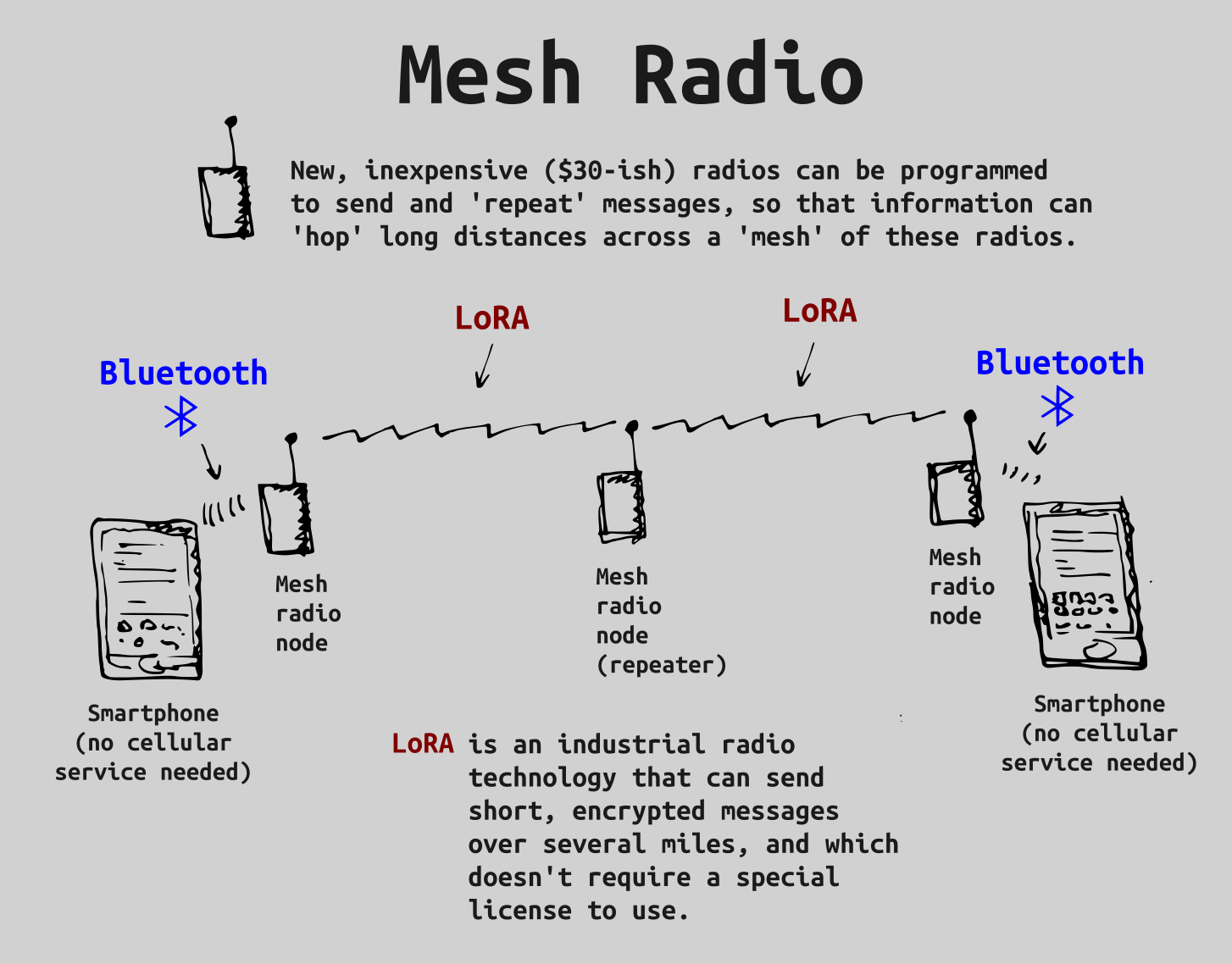
In contrast, a mesh radio network uses small, inexpensive radio devices (around $30) that are able to send and relay messages without relying on cellular towers or the internet. These devices can connect to your smartphone via Bluetooth, then uses LoRA (Long Range) radio technology to communicate with other mesh nodes up to several miles away -- even if the cellular network or power grid is down.
The "mesh" part is key: when nodes are spread across an area, messages automatically hop from one device to the next until they reach their destination. A node in the middle can act as a repeater, extending the network's reach far beyond what any single radio could achieve on its own. No special license is required, and all messages are encrypted.
What We'll Explore
- What mesh radio is and how it differs from cellular and Wi-Fi
- How messages hop between radios in a mesh network
- The role of antennas, placement, and terrain
- Working with affordable hardware
- Real-world use cases: farms, neighborhoods, events, field work, and protests
Applications
- Farm monitoring - Track conditions across large properties without cellular coverage
- Grid-down communications - Maintain text messaging when power and internet are unavailable
- Remote sensing - Monitor water levels, temperature, and other conditions in areas without infrastructure
- Community networks - Build neighborhood communication systems independent of commercial infrastructure
You'll Leave With
- A clear mental model of how mesh networks function
- Experience sending messages across a live mesh
- Practical insight into deploying radios in the field
- Better questions about range, reliability, and power
Who This Is For
Curious beginners, farmers, organizers, educators, outdoor workers—anyone interested in resilient or off-grid communication. No technical background or prior radio experience required.
Instructors
Mike Beach is an Electrical Engineer with experience designing and debugging electro-optical and analog systems. He has held low-noise analog design classes for IEEE, co-taught a robotic design course based on a hybrid Raspberry Pi/Arduino platform at Artisan's Asylum, and is an active participant and mentor at Circuit Hacking night held at the Asylum every Wednesday.
Don Blair is a researcher, educator, and tinkerer with a background in physics and philosophy. He has built off-grid systems for remote monitoring, and enjoys exploring ways of helping folks to gain greater control over the technologies on which they depend.