A Gentle Introduction to Local Energy Resilience
Overview
Build your intuitions around energy scales—how much do you need to accomplish what you want to do?—and learn ways of generating, storing, and using electrical energy with simple systems, at low cost.
This workshop meets once per session. Please check the schedule above for upcoming dates. By registering, you are committing to attend the full session.
Instructors
Mike Beach is an Electrical Engineer with experience designing and debugging electro-optical and analog systems. He has held low-noise analog design classes for IEEE, co-taught a robotic design course based on a hybrid Raspberry Pi/Arduino platform at Artisan's Asylum, and is an active participant and mentor at Circuit Hacking night held at the Asylum every Wednesday.
Don Blair is a researcher, educator, and tinkerer with a background in physics and philosophy. He has built off-grid systems for remote monitoring, and enjoys exploring ways of helping folks to gain greater control over the technologies on which they depend.
Class Description
In this hands-on outdoor workshop, we'll explore practical approaches to human-scale renewable energy. A key focus is building intuition for energy scales—understanding what's possible and what's not when it comes to powering our lives off-grid. We'll draw on ideas from David MacKay's Sustainable Energy—Without the Hot Air, with handouts and diagrams to help guide your thinking.
We'll start by assessing typical household electrical needs and discussing how to power essential devices during grid outages. From there, we'll dive into battery storage options, solar panel basics, and human-powered alternatives—including using a treadmill motor connected to a bicycle to charge a battery.
Since this workshop takes place outdoors in most weather, we'll put our energy systems to the test by building DIY electric vests and heated blankets to keep warm. Picture sitting in a circle wearing wearable heated sleeping bags while sipping electrically-warmed tea! This is pedagogical too: you'll see firsthand how quickly batteries drain when the application is heat, which naturally leads into a discussion of insulation and energy conservation strategies.
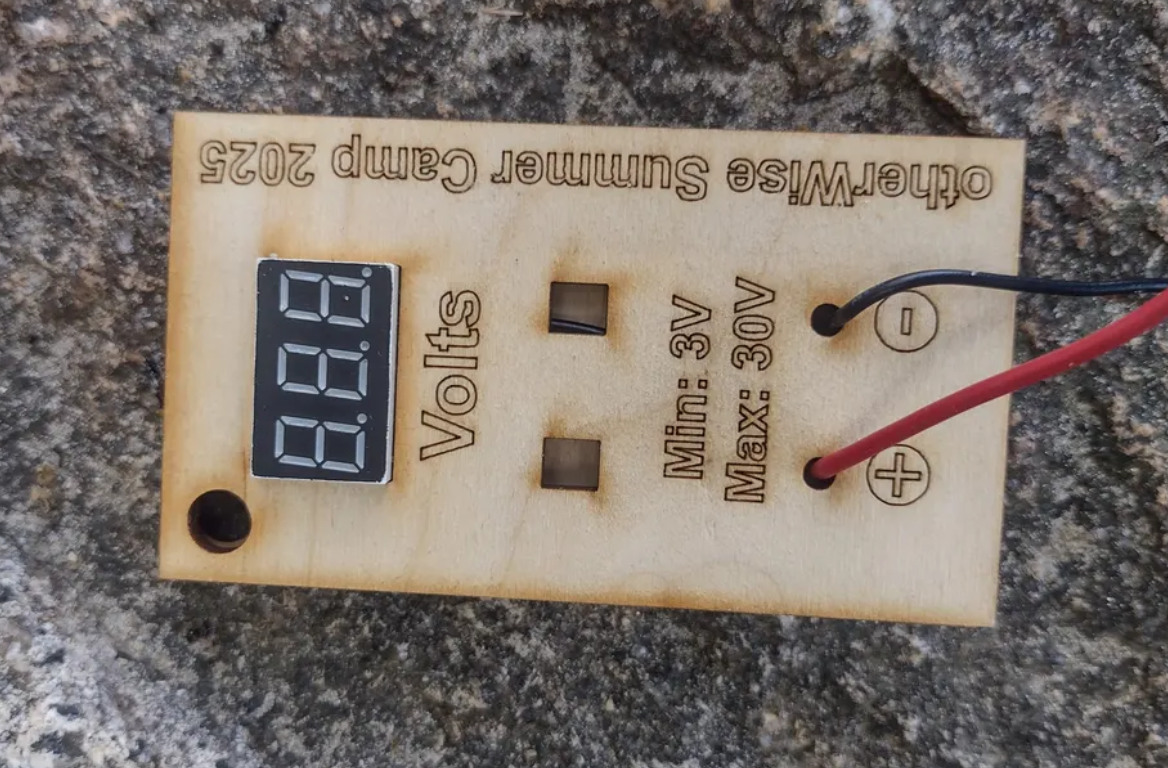
Students will also learn to use multimeters for measuring voltage and current, and take home a DIY multimeter and a gravity light or crank light they've assembled themselves.
This workshop is intended for everyone—from complete beginners to folks with some electrical experience looking to expand their skills. We're also exploring a pathway for participants who'd like to learn to teach this material themselves, with opportunities to co-teach future sessions.
Material Fee
The materials fee for this class is $15. This covers components for the take-home projects (DIY multimeter and gravity/crank light). This will be paid directly to the instructor at the start of class. Cash or Venmo accepted.
Class Goals
- Build intuition for energy scales—what's possible and what's not
- Assess electrical needs for powering devices without grid access
- Understand battery storage options and affordable solutions
- Learn generation methods: solar panels, pedal-power, and wind
- Use multimeters to measure voltage and current
- Build a bicycle generator using a treadmill motor
- Construct DIY heated wearables and experience energy trade-offs firsthand
- Explore insulation and energy conservation strategies for heat applications
- Construct gravity-based and crank-powered lighting
Students Should Bring
Warm layers appropriate for an outdoor workshop. Comfortable clothes you don't mind getting a bit dirty. Closed-toe shoes recommended.
Prerequisites
None! This class is designed for kids and adults alike—no prior experience necessary.
Workshop Details
- When: February 2026
- Where: Outdoors in Greater Boston, MA
- Duration: ~90 minutes
- Group size: Limited to 10 participants
- Cost: $45 | $65 | $85 (Sliding scale)
Additional Resources
Participants will gain access to live monitoring data from a residential solar installation and opportunities to contribute to community energy infrastructure projects.
Register
Registration opens late January 2026.
Please email info@waterbearfieldschool.org with any questions.