Intro to Off-Grid Power for Sailing Vessels
Overview
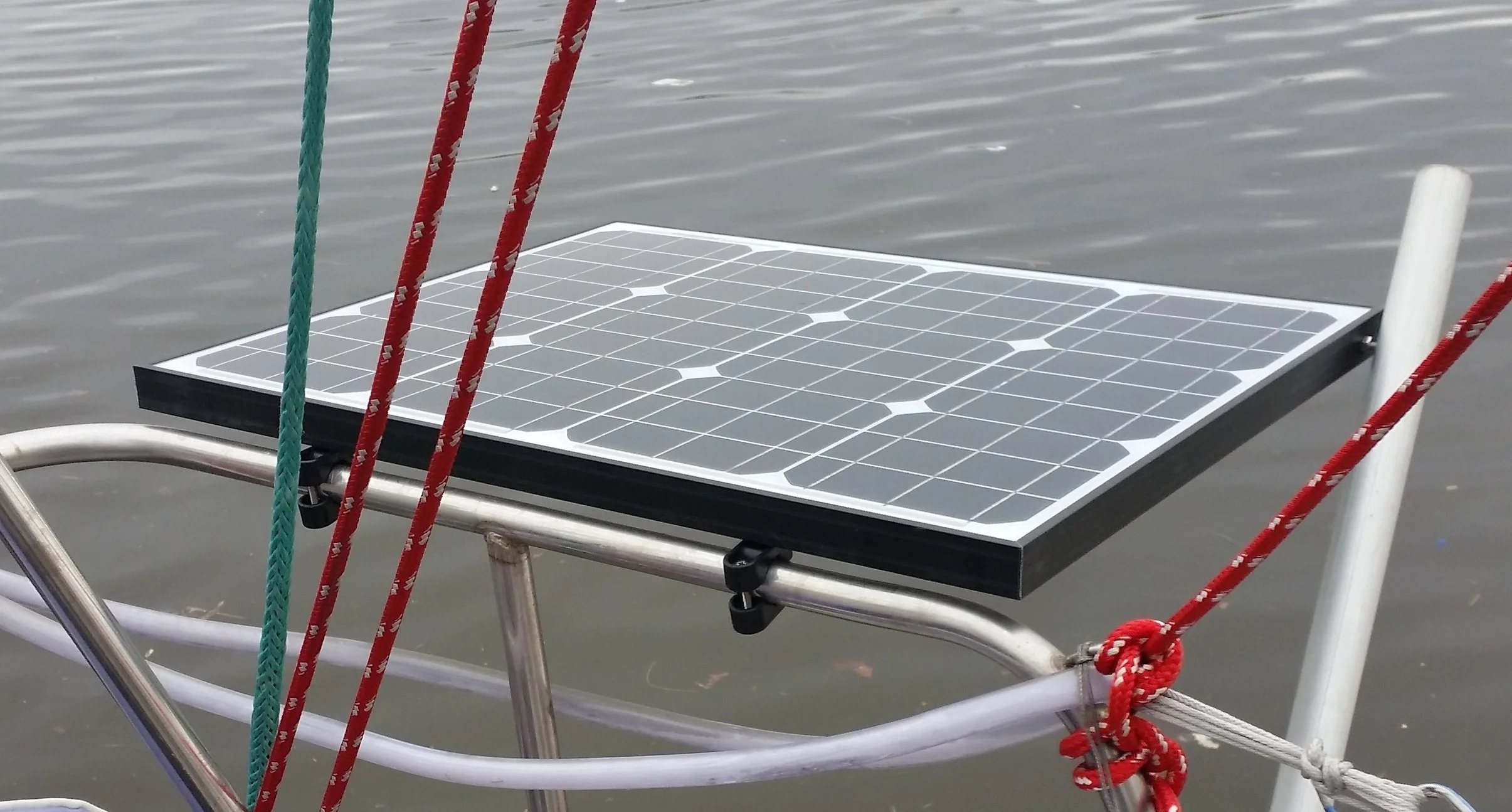
A beginner-friendly, hands-on workshop covering the essentials of boat electrics so participants can confidently manage power on their own vessels—whether day-sailing, cruising, or living aboard.
Understanding your boat's electrical system is essential for cruising with confidence. How much power do you actually use? How long will your batteries last at anchor? Is your solar panel keeping up? This workshop builds the practical intuition you need to answer these questions—and to troubleshoot when things go wrong.
What We'll Cover
Basics of Electricity
- DC vs. AC: what's on your boat and why it matters
- Volts, amps, and watts—building intuition for what the numbers mean
- How circuits work aboard a vessel
Batteries
- Types: lead-acid, AGM, and lithium iron phosphate (LiFePO4)
- Charging basics and how to keep batteries healthy
- Maintenance essentials and common pitfalls that shorten battery life
Solar Charging
- Panel selection: sizing and mounting options for sailboats
- Charge controllers: PWM vs. MPPT and when each makes sense
- Real-world output: what to actually expect from your panels in varying conditions
Inverters and AC Power
- Powering AC devices safely from your battery bank
- Sizing an inverter for your needs
- Common mistakes and safety considerations
Building an Energy Budget
- How to calculate your daily power needs
- Balancing generation and consumption to avoid surprises
- Working through a real scenario: a cruising sailboat at anchor for a weekend
Energy Density: Batteries vs. Diesel
- Comparing energy storage options by weight and volume
- Why electric motors and hybrid systems are gaining traction in the marine world
Hands-On Portion
Participants will wire up a simple, complete power system on a tabletop—no risk to anyone's boat. We'll work with:
-
Batteries — connecting in series and parallel, measuring voltage and state of charge
-
LEDs and lights — understanding loads, polarity, and how to calculate current draw
-
A small DC motor or pump — seeing mechanical work powered by your battery
-
A solar panel and charge controller — seeing real charging in action
By the end, you'll have traced a circuit from panel to battery to load, used a multimeter to take real measurements, and built intuition for how all the pieces fit together.
Workshop Details
- Duration: 4–6 hours
- Group size: 6–10 participants
- Who it's for: Adults and youth (12+ with supervision). No prior electrical experience needed—just curiosity.
- Location: TBD — can be hosted at a sailing facility or on-site near the water
Youth Session: Intro to Electricity Basics
For younger participants (ages 8–14), we offer a simplified version of this workshop focused on building a first intuition for how electricity works—no sailing knowledge required.
What We'll Explore
- What is electricity? — using water analogies (pressure = voltage, flow = current) to make the invisible visible
- Building a simple circuit — connecting a battery, wires, and an LED to make light
- Switches and control — adding a switch to turn things on and off, understanding open vs. closed circuits
- Series vs. parallel — wiring up multiple LEDs and discovering what happens when you add more
- Powering a motor — connecting a small DC motor to a battery and watching electrical energy become spinning motion
- Solar power demo — connecting a small solar panel and seeing it charge a battery or light an LED in real time
How It Works
Youth participants work in pairs or small teams, each with their own kit of components: batteries, wires with crocodile clips, LEDs, a small motor, and a switch. The session is guided and hands-on throughout—every concept is learned by building something.
The systems are intentionally simple and low-voltage (12V and under), so there's no shock hazard. The focus is on curiosity, experimentation, and the satisfaction of making something work.
Session Details
- Duration: 2–3 hours
- Group size: 6–10 participants
- Ages: 8–14 (younger with parent/guardian participation)
- Supervision: At least one adult helper per 4 participants
- Materials: All provided — participants take home their LED circuit
Register Interest
This workshop is currently in development. If you're interested in participating—or in hosting a session at your facility—please reach out.
Connection to Sailing Skills
This workshop builds directly on sailing skills—empowering folks to extend their time on the water sustainably. A cruising sailboat and a small homestead face remarkably similar energy challenges: limited generation capacity, battery storage constraints, critical loads that must stay powered, and the need for self-reliance when something fails. The principles transfer directly.
Related Workshop
Looking for an introduction to off-grid energy with a land-based focus? Check out our Gentle Introduction to Local Energy Resilience—a hands-on outdoor workshop covering similar fundamentals with a homestead orientation.